




6 signs your estate agency website needs redeveloping


A website built even three or four years ago was designed for a different internet. Back then, the only front door that mattered was Google. Today, a growing share of home movers, landlords and tenants are asking ChatGPT, Gemini or Perplexity to recommend an agent before they ever open a search engine. Recent research suggests more than a third of consumers now start their search with an AI tool rather than Google, and ChatGPT alone was handling around 900 million weekly users in early 2026.
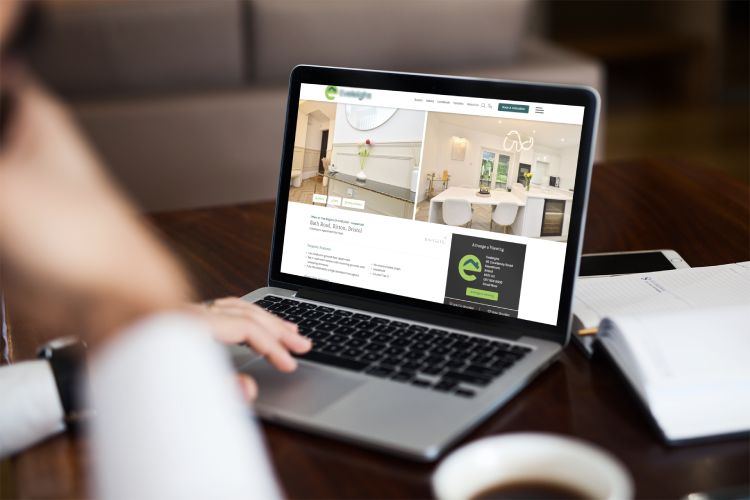
That changes what a “good” estate agency website looks like. It’s no longer enough to rank on page one of Google. Your site now has to be readable, trustworthy and citable to AI models too, on top of everything it always needed to do: load quickly, convert visitors, and give your team an easy way to keep it updated.
Your website is the engine that drives your agency’s acquisition, conversion and retention strategy
It’s more than just a digital storefront; it’s the starting point for valuation requests, landlord inquiries, and tenant applications. This is where search engines like Google and tools like ChatGPT and Gemini assess whether you’re worth recommending. However, this system can only perform effectively if it receives the necessary care, updates, and technical support.
Below are six signs it’s time to redevelop, including the AI search factors most agents haven’t thought about yet.
If your site was designed purely to rank in Google, it’s likely missing the things AI search engines actually rely on to recommend and cite a business: clean structured data (schema markup), clear FAQ content that answers real questions in plain language, and consistent, accurate information about your services, coverage areas and pricing across the web.
AI models don’t just crawl your homepage. They build an understanding of who you are from your whole digital footprint, including your reviews, your area pages, your blog and how consistently your brand is described elsewhere. If your website’s content is thin, outdated or vague, AI has nothing solid to pull from, and it may simply recommend a competitor instead, or worse, guess and get details about your agency wrong.
Being “mobile responsive” used to be the bar. It isn’t now. The majority of your traffic arrives on a phone, and both Google and AI crawlers judge your mobile experience first, not your desktop one.
Speed matters more than ever too. Industry research consistently shows that over half of mobile visitors abandon a page that takes longer than three seconds to load, and that conversion rates fall sharply with every additional second of delay. A slow, bloated site doesn’t just lose you leads directly, it also signals low quality to the search and AI systems deciding whether to feature you.
Technical SEO hasn’t gone away, if anything it matters more now, because it’s the same foundation AI search optimisation is built on. This includes:
Get this right and you improve your chances in Google Search, Google AI Overviews, and platforms like ChatGPT and Gemini all at once. Get it wrong, and you’re invisible across all of them, even if your branding looks great.
First impressions still matter, but what builds trust has shifted. Today’s vendors and landlords expect to see real Google reviews front and centre, clear team profiles, case studies, and area-specific content that proves you actually know the patch you’re operating in. A site that looks like a static brochure, with no reviews, no local proof points and no recent activity, reads as untrustworthy to a human visitor and gives AI search tools very little positive sentiment to work with when deciding whether to recommend you.
Content is still king, but the bar has moved. If your website hasn’t been updated to reflect the Renters’ Rights Act 2025, still references Section 21 “no fault” evictions as if nothing has changed, or is missing current guidance on deposit protection, EPC requirements or HMO licensing, that’s an immediate credibility problem, for landlord and tenant visitors, and for any AI model checking whether your content is accurate and current.
Ask yourself: can your website easily expand? Can you add new area guides, blog posts, FAQs and legislative updates without a developer involved every time? If the answer is no, your growth plans (and your AI visibility) will stall.
This is still the ultimate test. Calls to action, live valuation tools, and clear next steps convert browsers into leads, but only if they were designed into the site from the start rather than bolted on afterwards. On top of that, a modern estate or letting agency website should sync with your property feed and CRM automatically, so no enquiry, valuation request or applicant ever falls through the cracks between your website and your team.
Redeveloping a website from scratch doesn’t have to mean a slow, expensive, bespoke build, and it doesn’t have to mean a generic template either. Art Division’s web design platform is a modular, pre-built infrastructure, refined over 25 years and 100+ estate and letting agency websites, that’s designed for AI and SEO visibility from the ground up.
Because the technical foundation is already built and proven, we spend our time on your visuals and content instead of reinventing the back end every time, which keeps quality high and costs down. You start with the features you need, from £1,975+VAT and £165+VAT per month, and add from a library of 45+ modules whenever your agency is ready, including:
Every site is built on a foundation designed to rank in Google and to be readable, structured and citable to AI search platforms, and it pairs naturally with our dedicated AI Search Optimisation service if you want to go further with brand entity building, structured data and AI performance tracking on top.
Book a demo to see how it works, or get in touch to talk through what your agency needs.
Not always. If your website is relatively new, well-structured and technically sound, targeted AI optimisation work, such as adding schema markup, FAQ content and stronger local authority signals, can improve your visibility without a full rebuild. However, if your site is a few years old, slow, or wasn’t built with structured data in mind, redeveloping it first will give any AI optimisation work far more to work with, and will usually get you visible faster.
It means your website is structured so AI models can easily extract accurate facts about your agency: clear service and area pages, LocalBusiness and FAQ schema markup, genuine and consistent reviews, fast load times, and content that’s kept current with things like local market conditions and lettings legislation. Long, cluttered pages with no clear hierarchy confuse AI models just as much as they confuse human visitors.
Yes, and it matters more, not less. AI search optimisation and traditional SEO share the same technical foundation: fast pages, clean schema, quality content and genuine authority. A significant share of what appears in Google’s AI Overviews is drawn from pages that already rank well organically, so a strong SEO base makes AI visibility easier to achieve, not something separate from it.
It’s often faster than traditional Google rankings, sometimes a matter of weeks rather than the three to six months organic SEO can take, particularly for well-defined local queries with less competition. Highly competitive, generic searches will naturally take longer regardless of how well-optimised your site is.
Yes. Recent research suggests more than a third of consumers now begin their search with an AI tool rather than a traditional search engine, and that figure is rising quickly. When someone asks ChatGPT or Gemini “who’s the best letting agent in [your area]”, your agency either gets recommended or it doesn’t, and increasingly, that conversation happens before Google ever gets involved.








"*" indicates required fields