





Find Your Property

hamburger-background

How to Plan Real Estate Digital Marketing Campaigns

Real estate digital marketing covers every online activity used to win valuations, leads and instructions, from your website and SEO to paid ads, email and AI search. Done well, it turns curious browsers into instructed clients faster than traditional advertising alone.

What does success mean to you? Twice as many clients? More profit? More free time?

Buyers and landlords no longer start their search in just one place. Alongside Rightmove, Zoopla and OnTheMarket, growing numbers now turn to AI tools like ChatGPT and Google’s AI Overviews to research agents and local market conditions. A well-planned campaign needs to work across both, and in this guide, we’ll cover the essential steps to plan one that captures attention, builds trust with AI search tools, and converts leads into clients. If you’d rather have a specialist run this for you, see how our digital marketing for real estate agents service works.

1 – Define Your Goals

Before diving into the digital realm, articulate clear and measurable goals for your campaign. Are you aiming to increase brand awareness, generate leads, or drive website traffic? Understanding your objectives will shape the entire strategy.

TIP: It’s very important that you have a detailed business plan which includes your real estate digital marketing campaigns. Read our Tips for Writing an Estate Agency Business Plan that actually wins.

2 – Know Your TARGET Audience

Creating a buyer persona for each target audience will help you structure a more effective campaign. Begin by researching and identifying your ideal client’s demographics, such as age, gender, income, and location.

Understand their motivations, pain points, and goals; for landlords, this might include maximising rental yields, while sellers may prioritise a quick and profitable sale.

Gather this information through surveys, interviews, and market analysis. Compile your findings into a detailed profile, including a name and backstory to humanise the persona. This targeted approach will enable you to tailor your marketing strategies, making them more appealing and relevant to your prospective clients.

TIP: This is the sort of service we provide, so if you need help, please contact us or download our customer value journey plan below.

3 – Optimise Your Website

Ensure that your website is not just aesthetically pleasing but also user-friendly. Implement responsive design, fast loading times, and intuitive navigation. A seamless online experience is crucial for retaining visitors.

Here are some simple tips:

  • User-Friendly Design: Ensure your site is easy to navigate with a clean, professional layout.
  • Mobile Optimisation: Make sure your website looks great and functions well on mobile devices.
  • SEO: Use relevant keywords related to property selling and letting to improve your search engine rankings. (TIP: Google ‘estate agents near me’ – do you rank on page one?)
  • High-Quality Content: Regularly update your blog with useful information for landlords and sellers, like market trends and property management tips.
  • Fast Loading Speed: Optimise images and use efficient coding practices to reduce loading times.
  • Clear Call-to-Actions: Use prominent buttons and links to guide visitors towards key actions, such as contacting you or requesting a valuation.
  • Client Testimonials: Showcase positive reviews and success stories to build trust and credibility.
  • Contact Information: Make your contact details easy to find, including phone numbers, email, and office address.

4 – Leverage Social Media:

Social media platforms are invaluable for marketing for real estate. Identify the platforms where your audience is most active and create engaging content. Visuals such as high-quality images, virtual tours, and videos work exceptionally well in the real estate industry and can really boost your online presence.

Here are our top 3 channels when looking to attract landlords or sellers:

  • Facebook: With its broad user base and targeted advertising options, Facebook is excellent for reaching potential sellers through community groups, property listings, and sponsored posts.
  • Instagram: Visual content performs well on Instagram. Use high-quality images and videos of properties, virtual tours, and behind-the-scenes content to engage potential sellers.
  • YouTube: Perfect for in-depth property tours, client testimonials, and educational content about the selling process, which can help establish your expertise and attract sellers.

5 – Craft Compelling Content

Develop a content strategy that educates and engages your audience. Regularly publish blog posts, articles, or infographics that provide valuable information about the local real estate market, home-buying tips, and neighborhood highlights.

6 – Invest in SEO

Search Engine Optimisation (SEO) ensures your website ranks high on search engine results. Identify relevant keywords, optimise your content, and build high-quality backlinks to improve your website’s visibility.

To attract sellers and landlords in the UK through SEO, consider these tips:

  • Keyword Research: Identify and use relevant keywords such as “estate agents in LOCATION,” “property valuation,” “landlord services,” and “letting agents near me” throughout your website content.
  • Local SEO: Optimise your website for local searches by including your location in keywords, setting up a Google Business profile, and encouraging reviews from clients.
  • Quality Content: Regularly publish informative blog posts and articles on topics like property market trends, selling tips, and landlord advice. High-quality content improves search engine rankings and attracts more visitors.
  • On-Page SEO: Ensure your website’s pages are optimised with proper titles, meta descriptions, header tags, and alt text for images. This helps search engines understand and rank your content better.
  • Mobile Optimisation: Make sure your website is mobile-friendly, as a significant number of users search for property services on their phones. A responsive design improves user experience and boosts your SEO ranking.
  • List Backlinks: Build high-quality backlinks from reputable sites in the property and real estate industry. This can improve your site’s authority and ranking on search engines.
  • User Experience (UX): Improve site speed, ensure easy navigation, and provide a seamless user experience. A user-friendly website keeps visitors engaged and reduces bounce rates, positively impacting your SEO.

7 – Optimise for AI Search (GEO)

Estate agency marketing now has to work for two audiences: search engines and AI tools. Rightmove has already launched a ChatGPT app that surfaces live listings inside the chatbot, and a 2026 survey of UK agents by GetAgent found that 22% had seen buyers reference AI when explaining how they found a property. Independent industry research also suggests UK AI search adoption has grown sharply through 2025 and 2026, driven by Google AI Overviews, ChatGPT and Perplexity.

Generative engine optimisation (GEO) ensures AI tools can find, understand and cite your agency when someone asks a property question. Here’s how to start:

  • Answer questions directly: Structure content with a clear question as a heading and a concise, standalone answer underneath. AI tools lift these answers far more readily than long, unstructured paragraphs.
  • Add FAQ schema: Mark up your most common client questions with FAQ structured data, covered later in this guide.
  • Cite primary sources: Back up claims with data from ONS, Rightmove, Zoopla or HM Land Registry rather than vague statements. AI engines favour content that cites verifiable sources over generic copy.
  • Keep author and agency details visible: A named author with relevant experience, plus clear branch and contact details, builds the trust signals that AI tools and human readers both look for.
  • Update cornerstone content regularly: Stale pages lose ground in both classic and AI search. Revisit guides like this one every few months and refresh the publish date when you do.

Property is one of the sectors most exposed to this shift in search behaviour. Agencies acting on AI search visibility now have a genuine first-mover advantage over competitors still relying on keywords alone.

8 – Implement Paid Advertising

Utilise paid advertising on platforms like Google Ads and social media to increase your reach. Target specific demographics, interests, and locations to maximise the impact of your ads. Monitor and adjust your campaigns based on performance metrics.

Real estate business owners can leverage Google paid campaigns to effectively attract landlords and sellers. Here are the top three Google paid campaigns they can use:
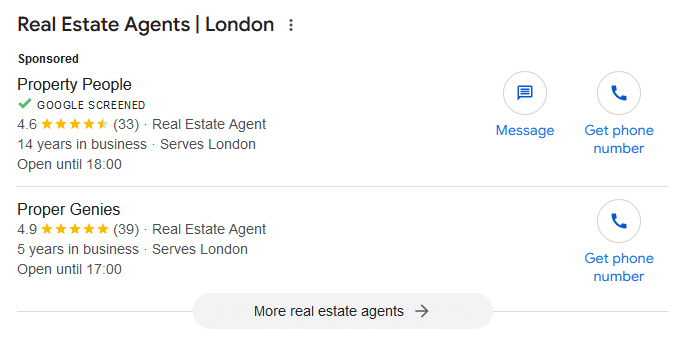
1. Google Search Ads:

  • Targeted Keywords: Create campaigns targeting specific keywords such as “sell my house fast,” “estate agents near me,” or “property valuation services.” This ensures your ads appear when potential clients search for these terms.
  • Ad Extensions: Use ad extensions to provide additional information, such as contact numbers, site links, and location, making your ad more informative and clickable.

2. Google Display Ads:

  • Visual Appeal: Use eye-catching images and banners to advertise your services across the Google Display Network, which includes millions of websites and apps.
  • Audience Targeting: Target specific demographics, such as homeowners in particular areas, landlords, or individuals interested in real estate. You can also use remarketing to reach people who have previously visited your website.

3. Google Local Services Ads:

Google Local Services Ads

  • Pay-Per-Lead: Unlike traditional pay-per-click ads, Local Services Ads charge you per lead, ensuring you only pay when a potential client contacts you.
  • Local Focus: These ads appear at the top of search results for local queries, making them ideal for real estate businesses who want to attract clients in their immediate area. Ensure your business profile is complete and verified to maximise visibility.

By utilising these Google paid campaigns, estate agents can effectively reach and attract potential landlords and sellers, driving more leads and business opportunities.

9 – Email Marketing Campaigns

Build and nurture your email list. Develop targeted email campaigns that provide value to your subscribers, such as market updates, exclusive property listings, or educational content. Personalise your messages to increase engagement.

Estate agents can run several effective email nurture campaigns to attract and retain landlords and sellers. Here are the top three:

Property Market Update Campaign:

  • Content: Regular emails providing updates on the local property market, including recent sales, trends, and forecasts.
  • Frequency: Monthly or quarterly.
  • Value: Helps position the agent as a knowledgeable expert, keeping potential clients informed about market conditions that might influence their decision to sell or rent out their property.

Educational Series Campaign:

  • Content: A series of emails that guide landlords and sellers through the process of selling or renting a property, including tips on preparing a home for sale, legal considerations, and maximising rental yields.
  • Frequency: Weekly or bi-weekly.
  • Value: Builds trust and provides valuable information, making potential clients more likely to choose the agent when they’re ready to act.

Success Stories and Testimonials Campaign:

  • Content: Emails highlighting recent successful sales or rentals, including testimonials from satisfied clients and case studies showcasing the agent’s expertise and results.
  • Frequency: Monthly.
  • Value: Social proof is powerful in convincing potential clients of the agent’s capability and reliability. Real-life examples and positive feedback can significantly influence decision-making.

By running these email nurture campaigns, agents can keep potential clients engaged, build trust, and increase the likelihood of converting leads into clients.

10 – Utilise Real Estate Portals

Leverage popular real estate portals to showcase your listings. Platforms like RightMove, Zoopla, and OTM attract a large audience actively searching for properties. Utilising property portals effectively can significantly enhance your ability to attract landlord and vendor leads. Here are some strategies to make the most of these platforms:

  • Optimise Listings: Ensure your property listings are detailed, accurate, and professionally presented. High-quality photos, comprehensive descriptions, and key features will make your listings stand out. Include information relevant to landlords and vendors, such as rental yields or recent sales prices.
  • Use Featured Listings: Invest in featured or premium listings to increase visibility. These listings often appear at the top of search results, catching the eye of potential landlords and sellers.
  • Regular Updates: Keep your listings updated. Properties that have been recently updated are more likely to be viewed. Regular updates also signal to landlords and vendors that you are active and diligent.
  • Engage with Leads: Respond promptly to inquiries and engage with potential leads. Personalised responses can build trust and demonstrate your commitment to excellent service.
  • Market Insights: Share insights and data about the property market on your listings and profile. Landlords and vendors appreciate agents who understand the market and can provide valuable information.
  • Client Reviews: Encourage satisfied clients to leave positive reviews on your portal profile. Good reviews can significantly influence the decision-making process of potential landlords and vendors.
  • Comprehensive Agent Profile: Complete your agent profile with a professional photo, detailed bio, and contact information. Highlight your expertise in handling properties for landlords and sellers, showcasing any special services you offer.
  • Utilise Analytics: Most property portals provide analytics on your listings. Use this data to understand which listings perform best and why. Adjust your strategy accordingly to maximise lead generation.

11 – Monitor and AnalySe

Regularly analyse the performance of your digital marketing efforts. Utilise analytics tools to track website traffic, social media engagement, and lead conversions. Adjust your strategy based on the data to improve results continuously.

12 – Build Relationships & Stay Updated on Trends

Real estate is a relationship-based business. Engage with your audience through comments, direct messages, and social media interactions. Building trust and rapport online can translate into successful offline transactions.

The digital landscape is dynamic, and staying abreast of the latest trends is crucial. Keep an eye on emerging technologies, platforms, and consumer behaviours to adapt your strategy accordingly.

Conclusion:

A well-executed digital marketing for real estate campaign can propel your business to new heights in the digital age. By defining your clear goals, understanding your target audience, and leveraging various online channels, you can capture attention and build lasting relationships with potential clients. Remember, the key to success lies in continuous monitoring, adaptation, and a commitment to delivering value through your digital presence.

Frequently Asked Questions

What is digital marketing for real estate agents?

Digital marketing for real estate agents covers every online activity used to win valuations, leads and instructions, including a fast, well-optimised website, search engine optimisation (SEO), AI search optimisation, social media, email marketing, and paid advertising on Google and social platforms. The goal is to reach landlords, sellers and buyers at the moment they’re researching agents in their area.

What is the most effective channel for real estate digital marketing?

There is no single best channel. SEO and AI search optimisation build long-term, low-cost visibility, while Google Ads and Local Services Ads generate faster, more predictable leads. Most successful agencies combine organic content with paid campaigns, then use email marketing to nurture the leads both channels bring in.

How is AI changing real estate digital marketing?

Buyers and landlords increasingly use tools like ChatGPT and Google AI Overviews alongside traditional portals to research agents and local market conditions. Rightmove has already launched a ChatGPT app that surfaces live listings inside the chatbot. Agencies need content that AI tools can read and cite, which means clear, structured answers and properly attributed data rather than traditional keyword-led copy alone.

How much should a UK estate agency budget for real estate digital marketing?

Budgets vary by branch size and local competition, but many independent UK estate and letting agents allocate somewhere between 5% and 10% of revenue to real estate digital marketing, split across website maintenance, SEO and content, paid search, and social media. Agencies in competitive markets such as central London typically need to invest more to maintain visibility.

How long does it take to see results from a real estate digital marketing campaign?

Paid advertising can generate leads within days of launch, but most agencies see a meaningful uplift within four to six weeks once campaigns are optimised. SEO and AI search optimisation take longer to build momentum, typically three to six months, but the results compound and keep working long after a paid budget runs out.


Tags: , , , ,

Send us an enquiry

"*" indicates required fields

This field is for validation purposes and should be left unchanged.
This form collects and stores the information provided by you, so that we can contact you about your requirements. Please read our privacy policy for full information on how we manage and protect your submitted data.