




Chatbots – what are they and how do they impact the sales process?


According to Facebook, 2 billion messages are sent between people and businesses each month on their Messenger platform. The question is, how can the property industry – especially estate and letting agents – take advantage of chatbots?

The property industry has changed a lot over the past decade, mainly due to the impact technology has had on how service providers and customers interact. From video tours, real time chat platforms, to instant valuations and dynamic remarketing, agents have to adapt to the ever changing industry demands.
So are chatbots the next ‘big thing’ in property?
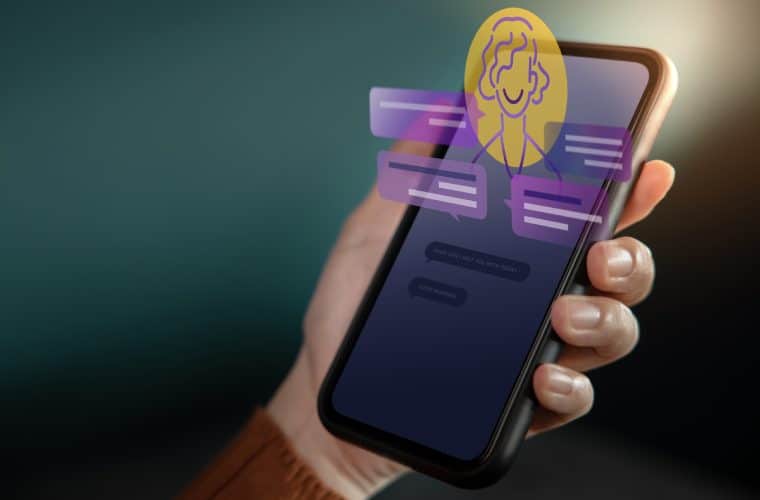
A ’chatbot’ is a medium of messaging similar to SMS or chat windows but with integrated Artificial Intelligence in order to engage users in a unique way to generate leads.
They are computer programs with predefined answers to questions to simulate a ‘real’ conversation with human users.
Recent research by Facebook has shown that 56% of consumers would rather message than call customer service so there is an opportunity for the property industry to engage with potential leads without having the vast resource of manpower needed to answer the phones.

There are two levels of chatbots – the basic kind that has a list of pre-programmed responses in reply to a list of pre-programmed questions.
These can be easily set up by anyone, even those relatively non-tech savvy.
Click on the button below to see an example of how the basic chatbot works.
The more advanced chatbots like Amazon’s Alexa, Google and Blyng use artificial intelligence and machine learning.
Put simply, this is the use of algorithms and mathematical models applied to the data received to progressively improve their performance on a specific task in this case human-to-computer communication.
They also use Natural Language Processing which is the application of these computational techniques to the analysis and synthesis of natural language and speech. The more data they receive the better they get.
Since bots access all their data from the cloud, it doesn’t require the user to download an application which makes using them low-friction.
Chatbots are well suited to mobile — the dominate computing technology for consumers — and offer some distinct advantages over traditional modes of communication.
Here is why:
At the moment they are not advanced enough to show commercial thinking or real empathy.
With these two characteristics, they cannot yet sell like an estate agent can; building up a true rapport, negotiating and closing deals.
They are also not yet really able to use verbal communication i.e. phone-calls, although Google is working hard on this. Hence charming the existing tenants living in a property to let you into view is beyond them. At this stage, chatbots cannot get anywhere near fully replacing humans, but they should complement each other.
We think agents are key and will be for a long time but that they should interact with a customer who already has all the necessary quantitative information gathered by the bot.
We think agents are key and will be for a long time but that they should interact with a customer already having all the necessary quantitative information gathered by the bot.
1 Speed
They can ensure that all leads are contacted within seconds of enquiring, engaging with them, answering questions on the property and area and will ensure the customer experience starts on a high. Actually, because of the amount of local data they can pull up around a property, they can tell you instantly more about the local area than any person can. This instantaneous engagement also allows viewings to be booked in advance of the competition.
2 Increase efficiency and save time and money
By automating conversations that would otherwise require an employee to answer, your sales teams can save time and money that can then be allocated to other efforts.
For example, bots will also free up your staffs’ time by asking those basic qualification questions before your staff pick up the phone. This also means that your negotiators can focus on building up a rapport with customers rather than interrogating them.
Instead of having your sales teams spending all of their time answering inbound questions, those individuals reallocate time to pro-actively take potential quality leads that have come the chatbot and turn them into customers.
Think about how much more time you would have to engage with potential customers face-to-face if the Chat Bot was doing the hard work for you.
3 Generate Leads
Chatbots use direct messages to gather information necessary to provide effective support. For example, asking users why they’re visiting your page is one question that is likely asked in every engagement.
A chatbot automatically delivers qualified leads to your sales teams while also fighting the fatigue caused by answering the same questions over and over.
A bot can ensure that any posts or adverts you create on Facebook or Instagram become much more effective at actually capturing the potential leads information. Instead of simply boosting a post and having the click-through guide people to your website and then disappear that click-through can now lead to our bot on Facebook Messenger and create an exchange of information where potential clients questions are answered and their contact information is captured.
You’ll find your team is happier with more quality leads and time to spend on more meaningful work trying to convert leads into customers.
4 Guide users to better outcomes
Users don’t always know where to go to find the information they’re interested in. In fact, your users may not even know what it is they’re interested in. Perhaps they just heard your name in passing and decided to explore.
By asking a series of qualifying questions, you route users to the best place for them to find the information they want.
5 After-hours support
No more 9-5 working, chat bots can engage with users 24 hours a day. Users will still be able to get the information they need whether you are in the office or not.
Chatbots help you significantly decrease the average time to respond, bringing you closer to your customers’ expectations.
6 Engage Users in a unique way
Traditionally, customer questions were routed to businesses via email or the telephone, which made user experiences fairly standard and non-customized. But chatbots offer a new, fun and interactive way to engage with property businesses.
Giving your chatbot a personality will help make your chatbot more memorable, ensuring that your user will think of your estate agency the next time they are looking to use your services.
On average the open rate of a message send to Facebook messenger is around 80-90%.A recent experiment run by the lettings department of Life Residential over 90 days period – August to October 2018 – resulted in 40% engagement. Out of engagements send via a chatbot, 2573 people engaged with the bot – very close to 40%. Those engagements were made up of 38,593 questions and answers. With 2187 or in simpler number 85% of engagements leading to scheduled viewings.
This equates to around 220 lets agreed.
This is only the beginning. As we get more and more used to using messengers to interact with businesses, those numbers will inevitably grow.
Yes and no. If an agent was going to go out tomorrow and try to build their own chatbot using real A.I and natural language processing it would easily bankrupt most if not all of them. The good news is that there are already solutions on the market, such as ManyChat – providing businesses with the ability to create their own chatbot sequences from as little as $10 per month and Blyng, providing a more advanced AI sequence out of the box for a slightly higher monthly fee.








"*" indicates required fields