




Estate Agent Property Blog Ideas


According to TV presenter and property expert Phil Spencer, most consumers are confused and ill-informed about property transactions – but estate agents are best-placed to change that.
Writing in Estate Agent Today, he said: “The modern consumer is certainly more information and resource-led than ever before. By providing clients with the advice and information they require, you can keep your brand ‘front of mind’ and increase your chances of becoming someone’s go-to property expert for life.”
Starting a blog is one of the best ways we can think of to fill that knowledge gap, while also generating leads for your estate agency and making conversions happen. Looking for estate agent blog ideas so you can plan your content calendar? You are in the right place.
Write blogs packed with good, useful and shareable content, and you won’t just drive traffic to your website. You’ll be seen as an authority, making your estate agency business more visible and improving your search rankings on Google.
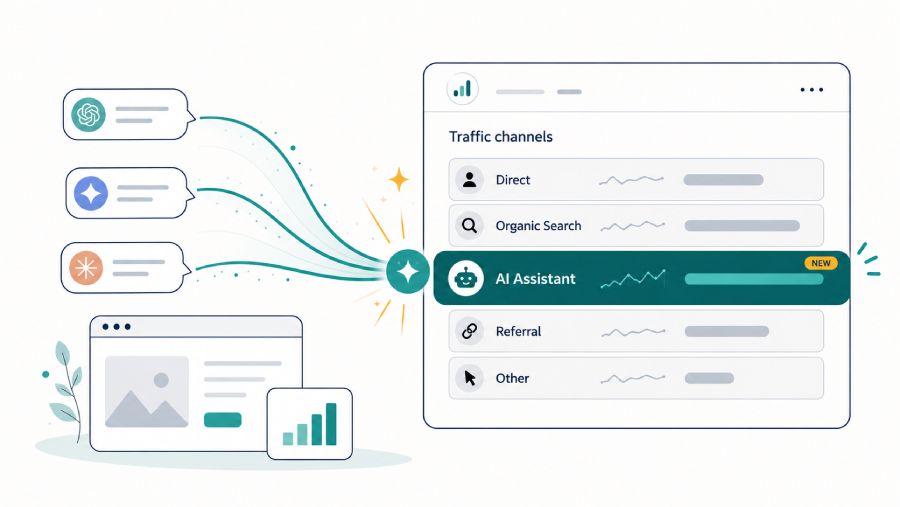
In 2026, your blog content needs to work harder than ever. It’s no longer enough to rank on Google – your posts also need to be structured so AI tools like ChatGPT, Perplexity, and Google’s AI Overviews will surface and recommend them. This means writing in a clear, conversational, question-and-answer style, citing credible data sources, and covering topics with genuine depth. We call this Generative Engine Optimisation (GEO), and it should shape every blog post you write this year.
Read on for our top property blog ideas to help you get started.
When you start a blog, writing your first few posts can be exciting, as visitors to your website and your social media followers pile up. But what happens when the novelty wears off; you run out of real estate topics to feature and blogging starts to feel like a chore?
The answer is to be well-prepared in advance, with plenty of real estate blog post ideas ready at hand.
You’ll also need a planner – a basic spreadsheet will do – where you can programme your future blog ideas over the coming months. This will help you add variety to your blog and keep it seasonal and topical.
Obviously, you’ll be looking to direct your list of real estate topics to your target audience. However, it’s a good idea to go for a mix of both subject matter and format – so your blogs are never boring, and customers keep returning.
Google isn’t the only search engine your estate agency needs to think about anymore. In 2026, a growing number of property buyers, sellers, and landlords are starting their search on AI tools like ChatGPT, Perplexity, and Google’s AI Overviews – and the content those tools recommend is very different from what traditionally ranked well on Google.
Understanding how to write for AI recommendations isn’t just a nice-to-have. For estate agents, it’s becoming one of the most important content strategies of the year.
AI search tools don’t rank pages the way Google does. Instead, they scan the web for content that:
If your blog post ticks those boxes, there’s a genuine chance it gets cited by an AI tool when someone asks “which estate agent should I use in [area]?” or “what’s the property market like in [town] right now?” That’s essentially free, highly targeted visibility – and most of your local competitors aren’t thinking about it yet.
You don’t need to completely overhaul your blog strategy. In many ways, good AI-optimised content and good SEO content are the same thing: helpful, accurate, and well-written. But there are a few specific habits worth building into every post you write in 2026:
1. Answer the question in the first paragraph. Don’t make readers scroll to find the answer. AI tools pull direct answers from near the top of the page. If your post is called “What is the average house price in [area]?” – answer it in the opening lines, then expand below.
2. Use a Q&A or FAQ format where possible. AI tools love content structured around questions because it mirrors how people actually search. Adding a short FAQ section to the bottom of any blog post significantly increases its chances of being surfaced by AI.
3. Cite your sources. Reference the Land Registry, ONS, Rightmove, or Zoopla when you use statistics. AI tools are far more likely to recommend content that points to authoritative, verifiable data – it signals that your content can be trusted.
4. Write with local specificity. Generic national content is less useful to AI tools trying to answer a locally specific question. Posts that name your town, your streets, your specific market conditions, and your agency’s direct experience are far more valuable – and far less likely to be competing with national property portals.
5. Keep content updated. AI tools actively favour recently updated content. Add a “last updated” date to your posts, and revisit your best-performing blogs every 6 to 12 months to refresh statistics and add new insights.
Today, however, we’re looking at blog topics. There are lots of generic lists of real estate topics to be found on Google. But, using our experience of what works best, we’ve pulled together our top 18 types of blog posts, with plenty of ideas of our own.
This type of blog positions you as an authority in your local area. Think about blogging on anything that would influence people who might be relocating here. Talk about top restaurants and local attractions, the history of the place, or day trips easily reached from your location.
Really help potential movers see the ‘before and after’ of their move by building up a picture of how they’ll fill their weekends in their new home.
Local influencer blog post ideas: ‘Top 5 restaurants in X’, ‘The 3 historic sites you need to see in X’, ‘Best places for a night out near X’, ‘3 of the most reliable home moving services near X’, ‘Must-visit parks for families in X’, X’s 5 spas & leisure centres reviewed’.
TIP: If you’re writing about local businesses such as bars and restaurants, let them know so they can share your blog through their own social media accounts.
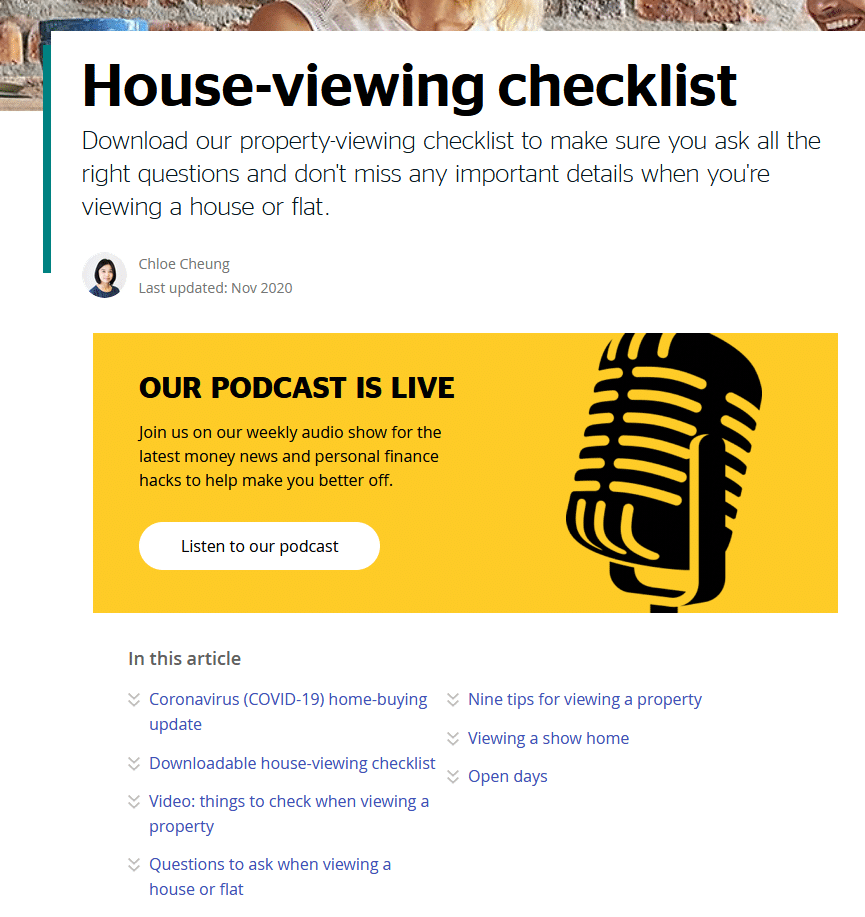
Checklists are brilliant because they are a quick, easy read – and something people will bookmark and return to. You can create checklists for buyers, sellers, landlords or tenants – about moving day, buying for the first time, revamping your kitchen or what to do if you’re thinking of renting out property.
Checklist blog posts ideas for estate agents: ‘Landlord compliance checklist’, ‘Moving out checklist for home sellers’, ‘Landlord yearly check-out list’, ‘Property inspection checklist for landlords’, ‘Buyers’ checklist: what to complete before the home is yours’.
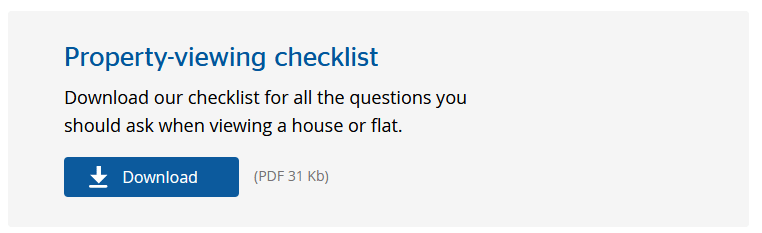
You can create a PDF of your checklist as a resource, which potential customers can print off on registration. Include your branding and contact details as a reminder that you’re out there, if needed. Here’s an example:

There’s no need to confine your blog topics to services you provide directly. Writing about any subjects loosely related to real estate can help you reach your target audience and boost your credibility. Examples include how to get a mortgage, why you should use a surveyor, and the conveyancing process.
Real estate blog post ideas: ‘How to get an EPC’, ‘What are property surveys and which one should I get?’, ‘What is a mortgage in principle and how do I get one?’, ‘How do I navigate the probate process to sell my property?’.

If you are looking to attract buyers, especially first-timers, think about topics which really nail down the process for the uninitiated. Lists of homebuyer FAQs do this in a very clear and readable way. Or look at explaining complex legal areas people might struggle to understand – the difference between exchange and completion or leasehold and freehold, for example.
Property blog post ideas for buyers: If you’re struggling for topics, think about the questions which buyers ask you again and again.
For example: ‘How do I choose a conveyancer?’, ‘What is exchange of contracts and when does it happen?’, ‘What can I do if my mortgage application is rejected?’, ‘How do I speed up the property sale process?’, ‘What do I need to do before the house sale completes?’.

It’s in your sellers’ best interests, and your own, that they present their properties to the market in the best possible light. Use your experience and knowledge of local conditions to write blogs about staging a property, which renovations bring the best return on investment and affordable garden makeovers.
Again, look to your past sellers’ frequently asked questions for marketing ideas – how to decide which offer to accept, for example.
Property blog ideas for sellers: ‘How to sell your home near Christmas’, ‘What to do if your property chain breaks’, What is conveyancing and how does it work?’, ‘10 Home staging ideas for sellers in X’, ‘How to sell your home is 5 steps’, ‘How much does in cost to sell your home in X?’, ‘How to choose an estate agent in X’.
Writing blogs that invite reader input is a good way to boost your brand exposure and increase traffic to your site and social accounts. If you’re writing about local restaurants or visitor attractions, ask for views on the ground and include them in your blogs.
You could share your testimonials or give people a better understanding of the buying and selling process with ‘day in the life’ posts from your staff. Data from Facebook or X (Twitter) polls can be used as the basis for posts too.
Property blog title examples: ’10 best schools in X’, ‘Where to shop near X’, ‘How safe is X in 2026?’, ‘How to sell your X home in winter’, ‘Conveyancing explained for X buyers & sellers’
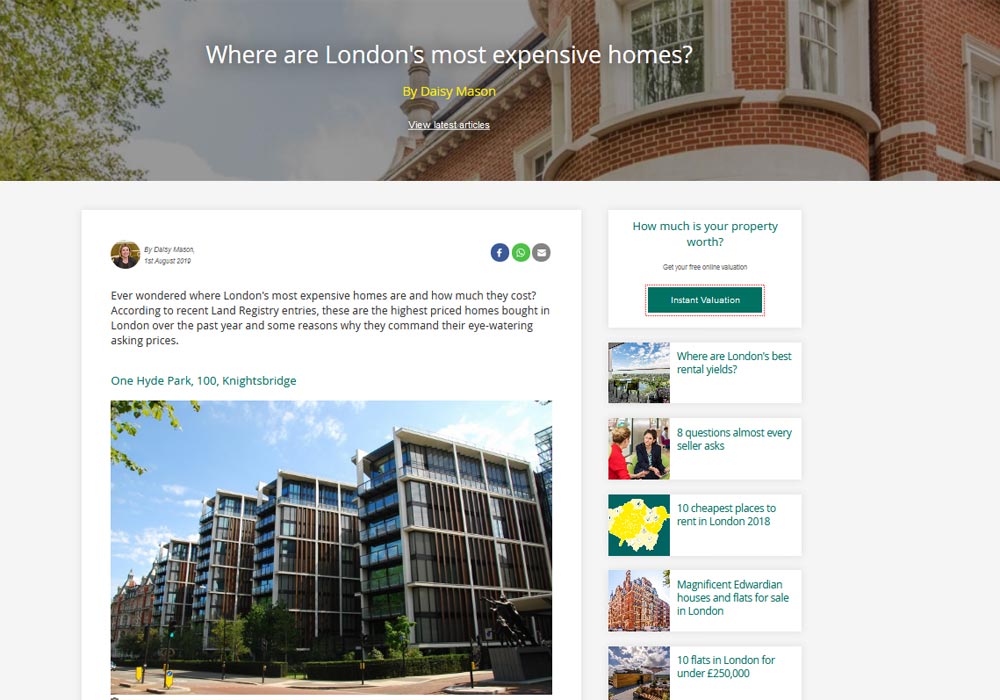
It’s a good idea to include the odd post which creates an impact and gets you noticed, alongside all of the useful, more everyday stories. Think celebrity house moves, especially if it’s into your area. A local take on topical events or your town’s most lavish or expensive homes.
Property blog title examples: ‘Guess who just moved into X?’, ‘The biggest shake up in X for X years’, ‘The new development set to change the face of X’, ‘The Christmas/Summer/Spring market is coming to X. Here’s what you need to know…’, ‘LTNs are coming to X. Here’s what we think’.
Get more people viewing your site with content that’s unique and interesting. Going outside of your real estate business with interviews of relevance to home buyers is one idea. You could commission a piece from a famous guest blogger or interview an expert in a field – on anything from avoiding cyber-crime to predictions for the future of the housing market.
Think of ideas that people can use to solve a problem now – how to use smart tech to make a home more saleable, for example.
Property blog title examples: ‘The new tech that’s changing estate agency’, ‘What will estate agency look like in 10 years’ time’, ‘The X housing market: what’s in store in 2026?’, ‘How to avoid the new wave of property scams’, ’10 Apps set to make home buying easier’, ‘Who’s buying what? Trends in the X housing market’.
Artificial intelligence is reshaping how people search for property, how agents work, and what buyers and sellers want to understand before they pick up the phone. That makes AI one of the most searched, most talked-about topics your estate agency blog can cover right now.
The key here is not to write about AI in abstract terms – but to answer the real questions your clients are already typing into ChatGPT and Google. Done well, this type of content positions your agency as forward-thinking and trustworthy, while also increasing the likelihood that your blog will be recommended by AI search tools.
There are two angles worth covering: blogs that explain how AI affects the property market (reassuring and educational for clients), and blogs that show how your agency uses AI tools to deliver a better service (great for credibility and instructions).
AI-focused blog post ideas for estate agents:
‘Will AI replace estate agents? Here’s the honest answer’, ‘How AI property valuations work — and why you still need an agent’, ‘How we use AI tools to find your perfect home faster’, ‘Can AI predict where house prices are heading in [area]?’, ‘What AI-powered property search means for buyers in 2026’, ‘5 ways artificial intelligence is already changing how we sell homes’, ‘Why the human touch still matters in an AI-powered property market’.
TIP: These posts perform particularly well in AI search results (ChatGPT, Perplexity, Google’s AI Overviews) because they directly address questions people are asking AI tools. Write them in a clear, factual, question-and-answer style, and you increase the chance of your agency being cited as a trusted source, giving you visibility beyond traditional Google rankings.
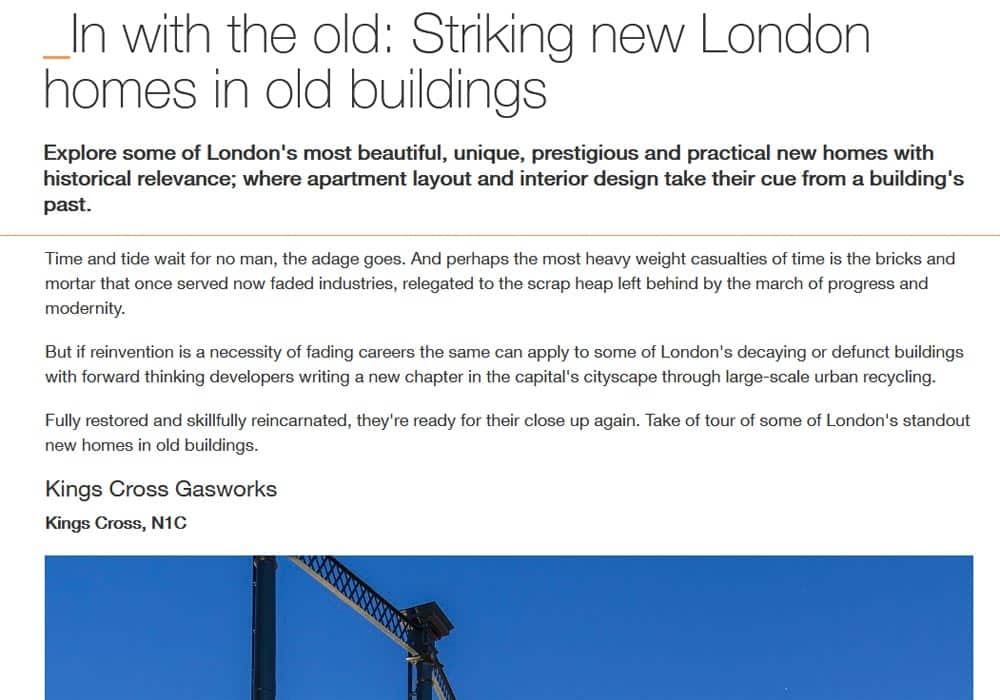
Many of the marketing ideas we’ve talked about will be sharable on social media if they are well-written and contain valuable, original content. Remember, if you want more shares, don’t underestimate the impact of a powerful image or great video in your blog and related social posts.
List type posts work well in this respect too – such as top properties in historic buildings or five homes with garden rooms.
Property blog title examples: ‘10 Ways to speed up your home sale’ ‘Top 5 questions to ask your landlord’ ‘5 Most iconic buildings in X’, ‘3 Of the worst mistakes you can make as a first time buyer’, ‘This will have your home sold in 3 months or less’, ‘2 Overlooked strategies for exceeding your asking price’.
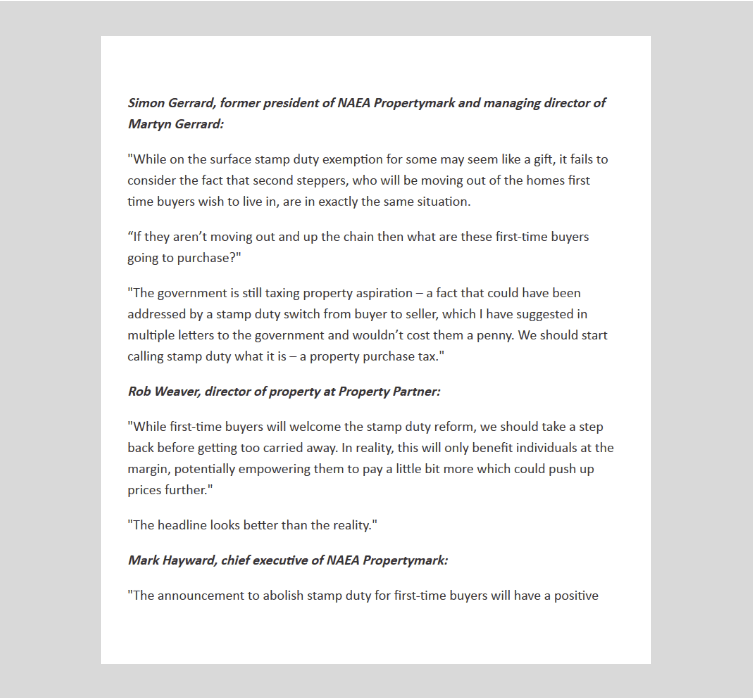
The crowdsourced blog post brings multiple influencers together to answer a single question, leveraging the authority of other experts and influencers. And, as a result, is one of the simpler property blog ideas.
You could ask three or more experts the same question and aggregate the answers into a single post and this creates a very powerful and rich blog post.
Make sure that you let everyone in the post know when it’s live, so they can share the post with their audience, and giving you extra traffic.
Property blog title example questions: ‘What is the most important step for achieving your asking price?’, ‘When is the best time to sell your home?’, ‘What are the 5 most important questions you would ask prospective tenants?’, ‘Where is the best place for property investment in 2026?’, ‘What attitudes are essential for thriving as a landlord?’.
Video content has always been powerful for estate agents, but in 2026, the smartest agencies aren’t treating video and blogging as separate activities. They’re creating one piece of content that works across three channels simultaneously: short-form social video, a long-form YouTube post, and an SEO-optimised blog, all from a single recording.
This approach saves significant time, stretches your content budget further, and ensures every piece of video you produce works much harder for your business.
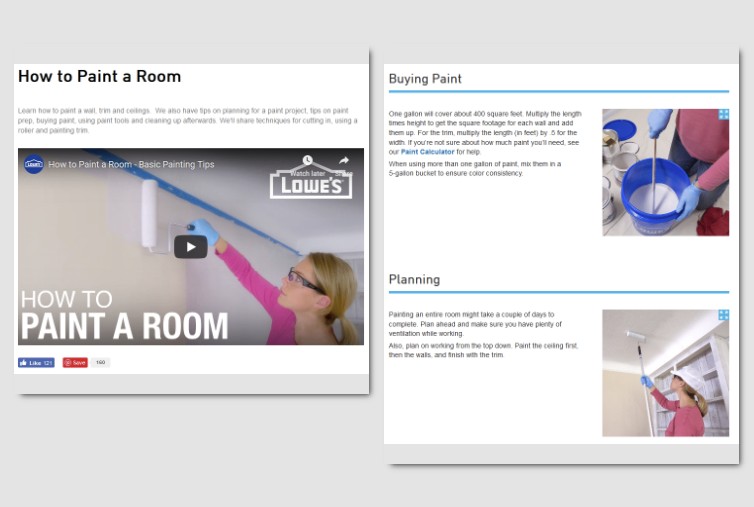
The YouTube Cut-Up (Still Works Brilliantly)
YouTube cut-up type blog posts are fast to put together and create high-value content. There’s a little bit of everything: images, text and, of course, video. (check out those 5 video marketing ideas for estate agents)
The original YouTube cut-up format remains highly effective and is worth keeping in your content calendar. The approach is simple:
Find a popular, relevant YouTube video, a property market update, a home staging guide, a mortgage explainer and build a blog post around it. Embed the video at the top, take screenshots of key moments, and add your own commentary and local expertise beneath each one.
This works because you’re adding genuine value on top of someone else’s content – your local knowledge, your professional opinion, your take on what it means for buyers and sellers in your area specifically. The original creator gets more views; you get a fast, rich blog post with embedded media.
YouTube cut-up blog ideas: ‘We watched this viral home staging video so you don’t have to – here’s what actually works’, ‘This mortgage explainer has 2 million views – but here’s what it doesn’t tell you about buying in [area]’, ‘The most-watched property investment video of 2026, reviewed by a local agent’.
Short-form video on Instagram Reels, TikTok, and YouTube Shorts has become one of the most effective ways for estate agents to reach new audiences — particularly first-time buyers and younger landlords. But most agents treat these videos as standalone social posts, record them, publish them, and move on.
The smarter approach is to repurpose every short-form video into a blog post. Here’s why this matters:
Step 1: Record your video as normal. Film your Reel, TikTok, or YouTube Short on whatever topic you’ve planned — a local market update, a tip for sellers, a landlord compliance reminder, a property tour highlight. Keep it between 30 and 90 seconds as usual.
Step 2: Transcribe it. Use a free tool like Otter.ai, Descript, or even Google Docs voice typing to transcribe the audio into text. This takes two to three minutes and gives you a rough draft to work from instantly.
Step 3: Expand and optimise. Take the transcript and expand it into a full blog post of 600 to 1,000 words. Add context, local data, a relevant statistic or two, and a clear call to action. Give it a keyword-rich title that matches what people are searching for.
Step 4: Cross-publish everything
One recording. Four pieces of content. All working for you across different platforms and search engines.
The best video-to-blog topics are ones where someone watching a 60-second video might want to read more detail afterwards. For estate agents, these include:
Market updates: ‘What’s happening to house prices in [area] this month?’ – a quick video summary with a detailed blog breakdown below
Compliance reminders for landlords: ‘New rules landlords need to know about in 2026’ – short video highlights, full checklist in the blog
Buyer tips: ‘3 things to check before you make an offer’ – punchy video, expanded explainer in the post
Property tours: ‘Inside one of the most unusual homes we’ve listed this year’ – video walkthrough with written description, local area context, and a link to the full listing
Agent introductions: ‘Meet [name] – here’s how she helped this family find their home in [area]’ personal video with a written case study format below
TIP: When you publish the blog version of a short-form video, always include a written transcript or at minimum a text summary. This makes the content accessible to people who prefer reading, improves your SEO, and, critically, gives AI search tools something to index and recommend. A video alone is invisible to AI search. A video with a detailed written post beneath it is not.
An interview post can be a great way to get influential people to contribute to your blog. This is because people are more willing to give you an interview than write a full article.
Emailing questions to an influencer and awaiting their written responses is a simple way to create a good interview post.
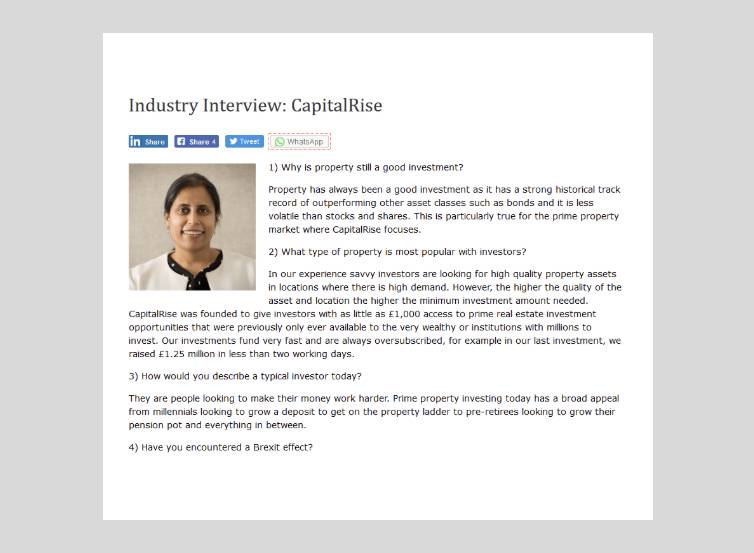
Another easy way for an influencer to give you an interview is through audio. All you have to do is call them and talk, but don’t forget to press the record button! You could then use this audio version of your interview as a podcast as well as transcribing it into a blog post to make the most out of this top-quality content.


Who doesn’t love a quote from an influential person?
It is very simple to create a quote post by pulling together quotes from influential people. Remember to notify the people who you quote so they can share the post with their own audience to increase traffic.
A quote blog post could easily be turned into a great resource, such as an image or an infographic, for people to download or share – and there you have it, one of the easiest property blog ideas to pull together.
Creating a simple embed and react blog post, is a great way to use somebody else’s content, hijack their authority and react to it accordingly. These content creators really want you to share their work so they can reach more people.
Reacting, whether positively or negatively, to embeddable media, such as a YouTube video, presentation or an infographic is a fast and simple way to create great content.
Embed a piece of media and write a reaction underneath, simple!
Here is an example:
The stat round-up post works best when you can use statistics that you have produced. However, you can still curate stats from multiple locations to create a great statistics post.
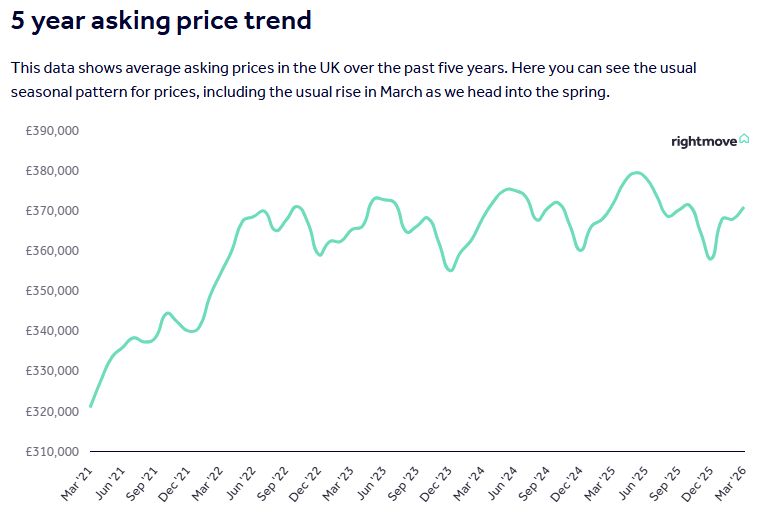
A quick way to do that is by using sites such as RightMove, Zoopla or the Land Registry and creating stats based on your focused locations.
Ideas for property blog infographics: Sales prices in your area over the last 5 years, level of supply and demand in the rental market, number of new build homes being built in your area, average rental yields across the areas you cover and how these have changed, typical buyer profile in the current market for different types of homes.
Case studies are a powerful way to demonstrate how you have helped your customers – not just how you could help them in theory.
You can use an actual testimonial and link to it, and within the post itself, you can break down the different parts and explain how you achieved the results you did for your customer.
Take the opportunity to highlight your specific services, and anything unique you offer. If you do this correctly, people reading your blog will recognise how you have overcome problems they may be facing (or have faced in the past).
Another aspect of this property blog post idea is for estate agents in the commercial sector. Here, it is common that complex negotiations have taken place to sell a number of units or enter into discussions with the council or other regulatory bodies. So, if that’s what you do, then show it off! This can demonstrate real-world expertise where the simple ‘sold’ marker on a listing doesn’t say much by itself. Or worse, it doesn’t hint towards all the effort you’ve put in.
Case study blog post ideas for estate agents: ‘How we sold 10 units in X development’, ‘Taking over from another agent: how we sold the house in 2 weeks’, ‘How we helped this landlord through eviction proceedings’, ‘5 tenant success stories – and why they still rent with us’, ‘The steps we took to sell this Grade II listed building’.
Consider adding a specific format to your content calendar – we call it the AI-Ready Authority Post. This is a long-form (1,500–2,000 word) blog that:
Examples for estate agents: ‘What is the average house price in [area] in 2026?’, ‘Is now a good time to sell in [town]?’, ‘How long does it take to sell a house in [area]?’, ‘What are average rental yields in [area] for landlords?’, ‘How has the Renters’ Rights Bill affected landlords in [region]?’
These posts serve double duty – they rank on Google and get recommended by AI tools, making them one of the highest-return content investments you can make this year.
TIP: Once you’ve published an AI-Ready Authority Post, submit the URL to Google Search Console to speed up indexing, and share it across your social channels. The faster it earns traffic and engagement, the sooner AI tools will start treating it as a trusted source.
In this video, you will learn more about how to best layout your blog post and what to avoid.
If you’d like some help planning your content marketing strategy and producing blogs that really make an impact, we at Art Division can help. To learn how you can use blog post ideas for real estate to generate more pre-qualified leads and enquiries, contact for help and advice today.
For SEO impact, aim for at least two to four posts per month. Consistency matters more than volume. Google and AI search tools reward sites that publish regularly. A mix of evergreen content (like seller tips) and timely posts (like market updates) gives the best results year-round.
AI tools like ChatGPT can help draft, research, and structure posts, but the content should always be reviewed and personalised by a human. Google’s quality guidelines prioritise helpful, expert, people-first content, so local knowledge, real experience, and your agency’s unique voice should always come through. Use AI as a starting point, not a final product.
Google ranks content that demonstrates Experience, Expertise, Authoritativeness, and Trustworthiness (E-E-A-T). For estate agents, this means publishing locally specific content, citing real data sources, attributing posts to named authors with credentials, and earning links from reputable local websites. Thin, generic content no longer ranks well.
AI search tools like ChatGPT, Perplexity, and Google’s AI Overviews tend to recommend content that is factually detailed, well-structured, and answers questions comprehensively. Writing posts in a clear Q&A format, citing trusted data sources, and covering topics with genuine depth (rather than surface-level summaries) increases the likelihood your content will be cited by AI.
High-value local blog topics include: the impact of the Renters’ Rights Bill on landlords in your area, leasehold reform and what it means for buyers locally, energy efficiency and EPC ratings under new regulations, and hyper-local house price trends using Land Registry data. These topics answer questions people are actively searching for right now.
There’s no magic number, but research consistently shows posts between 1,200 and 2,000 words tend to rank better for competitive topics. For simpler questions or checklists, 600 to 800 words can be enough. What matters most is that the post fully answers the reader’s question. Don’t pad for the sake of length, but don’t cut corners on genuinely helpful detail either.
Yes, strategically. Content about local schools, transport links, restaurants, and neighbourhood guides helps position your agency as a local authority. It also attracts people who are in the early research phase of a move, before they’re ready to contact an agent. This kind of content builds brand awareness and trust over time.
Tools like Google Search Console, AnswerThePublic, and Google’s “People Also Ask” feature are great starting points. You can also look at what questions your own clients and applicants ask repeatedly. If one person asks it, hundreds are likely searching for it online. Keyword research tools like SEMrush or Ahrefs can show you monthly search volumes for specific questions. This is the sort of research Art Division does in-house for our clients, so if you’d like to know more, please contact us.
Absolutely. The most effective lead-generating blogs include a clear call to action, whether that’s a free instant valuation, a downloadable guide, or an invitation to book a consultation. Checklists and guides gated behind an email sign-up are particularly effective for capturing landlord and seller leads. Don’t just write for traffic; write with a conversion goal in mind.
Traditional SEO focuses on keyword placement, backlinks, and technical structure to rank in Google’s blue-link results. AI search optimisation (sometimes called GEO – Generative Engine Optimisation) focuses on writing content that AI tools will confidently summarise and cite. The good news is they overlap significantly: authoritative, well-structured, factually rich content performs well in both. The key addition is ensuring your content answers questions directly and completely, rather than teasing answers to drive clicks.
The optimal number varies based on the complexity of your site. However, for the sake of structure and usability, it is best that you utilise sub-categories and tags. If you post 2-10 times per month, you are better off with 5 generic categories that have fresh content rather than 30 top categories where the majority are not updated.
A blog post (short for web log) is listed on a blog, where they are posted in reverse chronological order, while an article can be published in any traditional or digital publication (other than a blog!). Blog posts are usually written in the first person and are personal in nature.








"*" indicates required fields