
If seeing a banner ad while browsing the internet has ever convinced you to book the flight or buy the shoes you’ve been considering, then you’ll understand the power of retargeting (also known as remarketing).
Retargeting is all about using simple banner ads to remind the vaguely interested that you exist and convert them into paying customers.
If you are running or planning to run an online marketing campaign for lead generation for your estate agency, remarketing is a must. We explain what it’s all about…
Key Definitions: Remarketing & Retargeting for Estate Agents

Retargeting boosts your digital real estate marketing by showing your adverts to people who have already visited your website, as they continue to browse the internet or their social media accounts.
Study after study has shown that the more familiar a brand or product, and this is especially true for real estate agents, the more likely consumers are to send an enquiry or book a valuation.
So, it’s no surprise that many estate agents capitalise on retargeting by advertising the properties a user has browsed, after they have left the agent’s website.

Set your site up for retargeting, and every individual visit made to your website is recorded by a code known as a cookie. Cookies are available from both Google (including YouTube) and Facebook (including Instagram) and are the foundation stones of any retargeting campaign for estate agents. They allow you to compile lists of the type of visitors you receive.
In the case of estate or letting agents, this could be landlords, tenants, vendors, or those interested in purchasing a specific type of property.
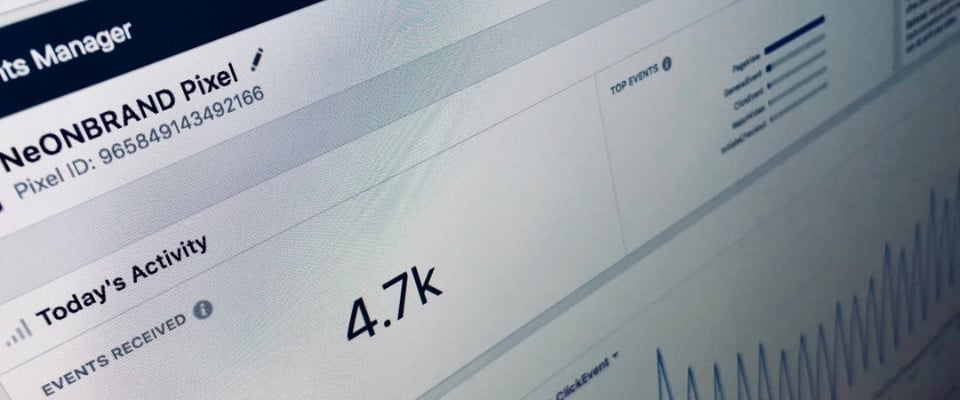
With pixel-based retargeting, you need to place a piece of code (a pixel) on your website. Every time a potential customer visits your pages, the pixel adds a cookie to their browser, which tells Google or Facebook to target the customer with the right type of advert.
Pixel-based retargeting works because it means your ads will be seen by people already on your site, whether they are buyers, vendors, landlords, or tenants. Plus, it happens instantly, so your potential customers could start seeing your ads straight away.
This form of retargeting uses lists of your existing customers or of visitors to your website who have provided their email addresses. List-based retargeting requires you to upload the list of contacts to the retargeting platform you choose.
Nowadays, the two words, retargeting and remarketing, are used pretty much interchangeably. Technically, retargeting refers to the pixel-based approach, which creates banner ads on the platforms used by your customers. Remarketing is more about following up with leads whose email addresses you already have. Confusingly, Google AdWords refers to both methods as remarketing.

Property decisions are rarely made quickly. Research consistently shows that buyers typically spend 8–12 weeks actively searching before making an offer, while vendors often consider their options for several months before booking a valuation. During that window, the average consumer visits multiple agent websites before contacting any of them. Without remarketing, most visitors leave and never return, with no mechanism to bring them back.
To see how retargeting works in practice for a property business, and how the pieces fit together from pixel setup through to ad delivery, watch our short explainer video:
As the video shows, the mechanics of retargeting are straightforward to set up, but the strategic decisions, who to target, on which platform, with what message, are where the real value is created. The sections below break down each of those decisions.
Retargeted ads put your properties and services at the front of your potential customers’ minds.
Retargeted audiences are significantly more likely to convert than cold traffic. Industry benchmarks suggest that retargeted visitors are 70% more likely to complete a conversion action, such as submitting an enquiry or booking a valuation, than first-time visitors.
For estate agents, where the cost of acquiring a new instruction or let can run into hundreds of pounds through traditional channels, this improved conversion efficiency makes remarketing one of the most commercially attractive tools in the digital marketing mix. The results may not be immediate – with such big purchases or decisions, your target audience may need to view your ads a few more times – but you are likely to see the impact over time.
Retargeting will increase awareness of your brand and give the impression that your real estate business is bigger than it is and more proactive. Your visitors will see your ads on sites they visit, even if those sites have nothing to do with property. The idea is to multiply your touch points with every prospect, increasing your return visits and enquiries. And, if your competitors aren’t using retargeting, it also puts you ahead of the game.
We setup and run remarketing campaigns for estate agents as part of their online marketing strategy. If you want to give remarketing a go, we can help you get up and running in no time.
While much of the conversation around property marketing focuses on attracting buyers and tenants, remarketing is arguably even more powerful when used to win vendor and landlord instructions – the lifeblood of any estate or letting agency.
The challenge with vendors and landlords is that their decision-making timeline is long and heavily researched. A homeowner thinking about selling will typically spend weeks – sometimes months – reading market commentary, comparing local agents, and visiting multiple websites before picking up the phone to book a valuation. A landlord considering switching agents or letting a new property follows a similar pattern. During that research window, your brand needs to stay visible.
This is exactly where remarketing earns its place. By tagging visitors who land on your valuation page, your landlord services page, or your “why choose us” content, you can build a highly targeted audience of people who are actively considering their options – and serve them ads that speak directly to where they are in that decision.
Practical approaches for instruction-focused remarketing:
The result is a remarketing funnel that doesn’t just recover lost buyer and tenant traffic – it actively supports your business development pipeline. At Art Division, we regularly run instruction-focused remarketing campaigns for estate agents as part of a wider digital strategy, and it’s one of the most direct ways paid advertising can help win new stock.
One of the most common questions estate agents ask about remarketing is the cost. The short answer is that remarketing tends to be one of the most cost-efficient forms of paid advertising available to property businesses – precisely because you are advertising to people who have already shown interest in your services, rather than targeting cold audiences from scratch.
Both Google and Meta (Facebook/Instagram) use auction-based pricing models, meaning you set a daily or monthly budget and only pay when someone clicks your ad (cost-per-click) or when your ad is shown a set number of times (cost-per-thousand impressions). There is no fixed price – your costs will vary based on your target audience size, geographic competition, ad quality, and how frequently you want your ads to appear.
As a general guide for UK estate agents:
It’s worth noting that remarketing budget is separate from any management fees if you use an agency to set up and run your campaigns. The key metric to focus on is not how much you spend, but your cost per conversion – what it actually costs to generate an enquiry, valuation request, or viewing booking from your retargeting activity.
Decide who your audience is and what you want your retargeting campaign to achieve as part of your online marketing campaign. You may want to attract more landlords or vendors and promote your free valuation service. Or, you may want to attract more buyers and tenants by showing them your available stock and enticing them to book a viewing.
Decide on the most appropriate platform for your target audience. Use Google AdWords to target people browsing the web, or Facebook Ad Manager for Facebook and Instagram. Both platforms are very effective when used for the correct demographic.
Add the correct code to your website – visit the help sections of Google AdWords to find out how to add the Remarketing Tag or Facebook AdManager for full instructions on how to add the Facebook pixel.
By having the correct tracking mechanism installed, you will be able to measure the effectiveness of your advertising by understanding the actions people take on your website.
Create buyer persona profiles of your target audiences – are they first-time buyers looking for a city centre flat or families searching close to a sought-after school, for example? This sets you up for delivering the right messages through your ads and will deliver much better results for your real estate marketing.
Research into ad fatigue suggests the optimal frequency for retargeting is 3–7 impressions per user per month for brand recall without irritation. Beyond this, click-through rates tend to drop and negative sentiment can increase. Most campaign managers set a frequency cap of 5 per month as a safe default, adjusting based on performance data.
Facebook’s dynamic product ads (DPAs) help businesses promote relevant products to people who have visited its website or mobile app. Estate agents can now remarket to buyers or tenants with the exact properties viewed on their website. The advantages of DPAs include the ability to:
DPAs are popular with companies trading online. However, they can also benefit businesses that sell offline, such as estate agents. At Art Division, we run dynamic remarketing campaigns for real estate agents that not only increase the likelihood of converting website visitors into viewing requests but also provide a point of difference when talking to potential vendors and landlords. So, a remarketing campaign can help your real estate business increase your viewings AND attract more stock.

Google AdWords retargeting enables businesses, such as real estate agents, to show targeted ads to users who have already visited their site. Past visitors will see these ads while they are browsing the web, watching YouTube videos or reading news sites, ensuring your brand remains familiar to them. This will entice visitors to come back for more.
As with Facebook, you can use this approach to encourage buyers, tenants, vendors or landlords to return to your website and take action; be it filling in a form or calling your office. You can create different Google remarketing lists. For example, you can choose to target people who have searched for your properties for sale via ads, showing them the exact properties they have viewed and inviting them to book a viewing.
Or you can go after vendors who have visited your sales-related pages with a banner inviting them to book a valuation.
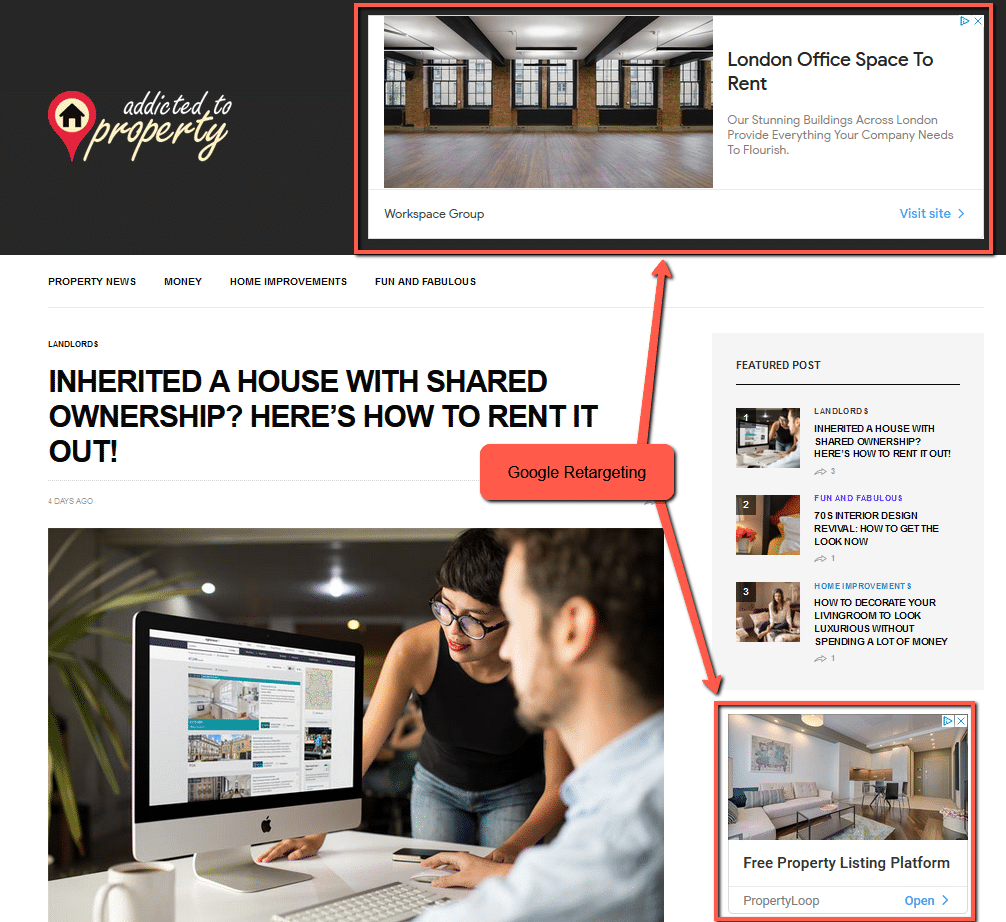
The obvious limitation of retargeting ads is that they only work with people who already know about you – they won’t bring in new users. For this reason, retargeting needs to be used alongside a content marketing strategy aimed at raising awareness of your business and, ultimately, generating leads.
Remarketing has traditionally relied on third-party cookies – small tracking files placed in a visitor’s browser by Google or Facebook – to identify and follow users across the web. However, this is changing.
Google has been progressively restricting third-party cookies within Chrome (the world’s most widely used browser), and Safari and Firefox have already blocked them by default for some time. While Google has delayed its full cookie deprecation timeline several times, the direction of travel is clear: pixel-based retargeting, as it has historically worked, will become less reliable over time.
What this means for estate agents:
This doesn’t mean remarketing stops working – but it does mean the approach needs to evolve. The most future-proof strategies for estate agents involve:
Estate agents who start building these first-party data assets now will be in a significantly stronger position as the advertising landscape continues to shift. It’s also worth noting that paid remarketing is increasingly being considered alongside AI search optimisation as part of a joined-up visibility strategy – ensuring your agency is found not just by returning website visitors, but by the growing number of buyers, vendors, and landlords using AI tools like ChatGPT and Perplexity to research their property decisions.
We can help with the set-up and running of a retargeting campaign as part of a wider digital marketing strategy for your estate agency. If you’re also looking to ensure your business gets found and recommended by AI search tools like ChatGPT and Perplexity, find out more about our AI search optimisation service – or contact us to discuss both.
Remarketing for estate agents is a form of paid digital advertising that shows targeted ads to people who have already visited your estate agency website. Using tracking pixels from Google or Facebook, your ads follow previous visitors across the web, social media, and YouTube, keeping your brand visible while they continue their property search.
The terms are used interchangeably in most contexts. Technically, retargeting refers to pixel-based advertising that shows banner ads to previous website visitors across the web and social platforms. Remarketing more specifically refers to re-engaging contacts via email, people who have already given you their details. Google uses “remarketing” to cover both approaches within its ad platform.
Results from remarketing campaigns are rarely immediate. Because property decisions, whether buying, selling, or letting, involve extensive research, it’s common for potential clients to need multiple ad exposures over weeks before taking action. Estate agents typically see the clearest impact from remarketing over a period of one to three months, particularly when campaigns are segmented by audience type (vendor, landlord, buyer, tenant).
Remarketing tends to be one of the more cost-effective forms of paid advertising for estate agents because it targets a warm, pre-qualified audience rather than cold traffic. Budgets can start from as little as a few hundred pounds per month, though the right spend depends on your target audience size, geographic area, and campaign goals. Both Google and Facebook operate on a pay-per-click or pay-per-impression basis, giving you control over daily spend.
Yes. Remarketing campaigns can be specifically targeted at website visitors who have browsed valuation-related pages. By serving banner ads to those visitors that promote your free valuation service or highlight your local expertise, you increase the chance of converting that interest into a booked valuation. This makes remarketing a direct tool for winning more vendor and landlord instructions, not just viewings.
The main limitation is that remarketing only reaches people who have already visited your website; it cannot generate brand new awareness on its own. If your site has low traffic, your remarketing audiences will be small, and your campaigns will be less effective. Remarketing also requires an ongoing content and SEO strategy to keep fresh visitors flowing in. Additionally, increasing use of ad blockers and browser privacy restrictions (such as the phasing out of third-party cookies) is reducing the reach of pixel-based tracking, making first-party data – such as email lists – increasingly important.
Major browsers have been progressively restricting third-party cookies, which underpin pixel-based retargeting. This means traditional pixel tracking is becoming less reliable. Estate agents are advised to build their own first-party data – email lists, CRM contacts, and enquiry data – which can be uploaded directly to advertising platforms as custom audiences. Google’s Privacy Sandbox and Meta’s Conversions API are also emerging as technical solutions designed to maintain ad targeting effectiveness in a cookieless environment.
The best platform depends on your target audience. Google’s Display Network reaches users across millions of websites, news platforms, and YouTube, making it effective for broad visibility and for targeting buyers or tenants during general browsing. Facebook and Instagram are better suited for social-first audiences and for visually engaging property ads that benefit from high-quality photography. Most estate agents see the strongest results by running both platforms simultaneously, with different creative and messaging strategies for each.
"*" indicates required fields